 Tickmill
Leveraged CFDs can drain an account quickly; most retail traders lose money.
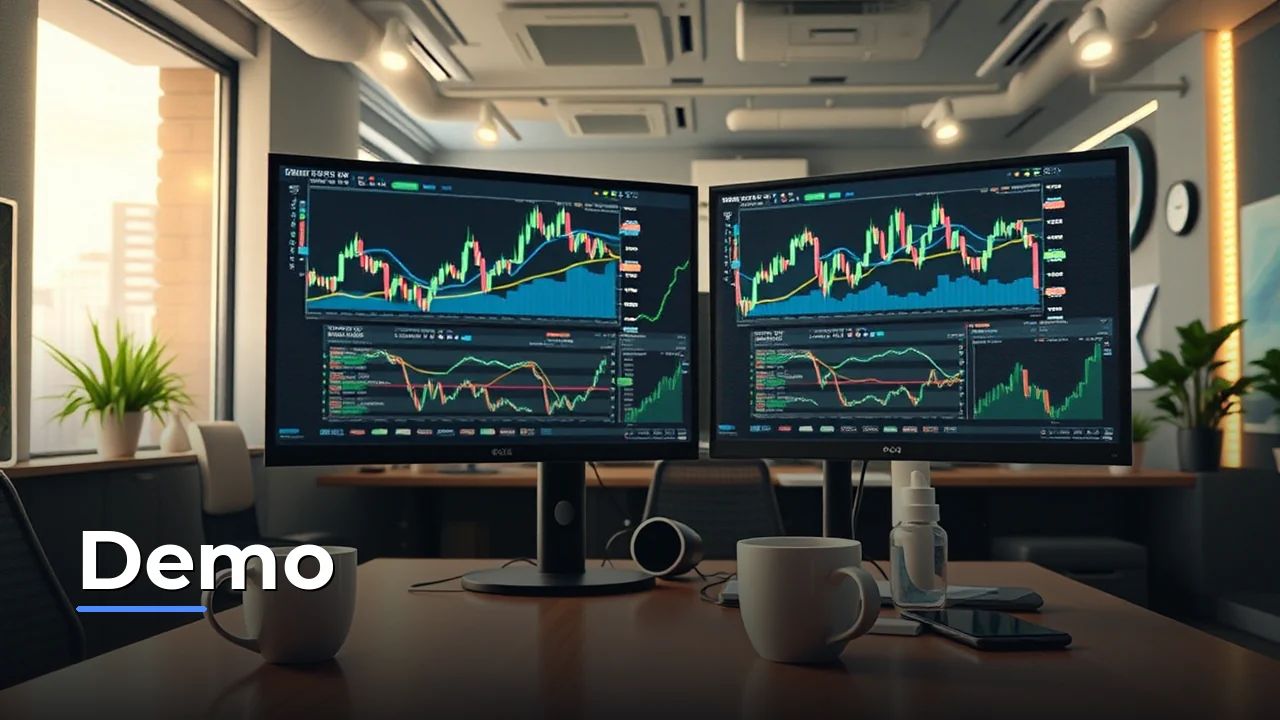
Opening a practice account is the first step most traders take before committing real money. The Tickmill demo account gives you access to the same trading platforms and market conditions as a live account, but with virtual funds. It is a direct way to test a strategy or learn how the platforms work without financial exposure.
For traders in Uganda, this is relevant because residents trade almost exclusively through offshore brokers, and Tickmill is one such international broker. We will walk through what the demo account includes, how it works, and what to look for when deciding if this broker is the right fit for you.
How the Demo Works
The demo account on Tickmill operates on the same infrastructure as a live account. You get access to MetaTrader 4 (MT4) and MetaTrader 5 (MT5), the two most widely used platforms in the industry. The data feed and execution speeds mirror the live environment.
Your account is funded with virtual money, so you can test aggressive strategies or new indicators without worrying about a loss. The key detail is that it uses live market prices, so the fills you get on a demo are a realistic approximation of live conditions.
Tickmill Account Types
You can open a demo version of any of the three account types Tickmill offers. This is useful because it lets you see the differences in spreads and commissions without paying for them.
| Account Type | Spread | Commission | Min. Deposit (Live) |
|---|---|---|---|
| Classic | Wider, commission-free | USD 0 | USD 100 |
| Pro | From 0.0 pips | ~USD 2 per side | USD 100 |
| Raw | From 0.0 pips | ~USD 2 per side | USD 100 |
The main decision is between the Classic account, which has no commission but a wider spread, and the Pro/Raw accounts, which have a raw spread and a small commission. If you plan to scalp or use automated strategies, the Pro or Raw model usually costs less overall. If you trade less frequently, the Classic account might be simpler.
Platforms and Tools
Tickmill provides access to both MT4 and MT5, which covers most retail trading needs. You can also use the mobile apps for either platform, which sync with your desktop account. This means you can practice on your phone in Kampala or elsewhere, then review the same charts on your computer.

What You Can Trade
The instruments available on the demo mirror the live offering. Tickmill covers forex, indices, commodities, stocks, bonds, and crypto CFDs. For a Uganda-based trader, the typical focus is forex pairs like SPX500 or SPX500, but it is worth checking on the platform whether a specific instrument you are interested in is available.
Funding and Costs in Uganda
When you decide to move from demo to live, funding is straightforward. Tickmill supports MTN Mobile Money and Airtel Money, which are the dominant payment methods in Uganda, alongside bank wires and cards. Mobile money deposits typically take minutes to arrive.
A practical detail: accounts are usually denominated in USD, not UGX. That means you will incur a conversion cost when moving your money into the trading account. The demo account itself is funded with virtual USD, so you can get used to the pricing scale without worrying about deposit logistics.

Limitations Worth Knowing
No demo account is perfect, and it is worth being honest about the gaps.
First, demo execution is often faster than live execution. During high volatility, a live order might slip slightly more than what you see on a demo. This is not a Tickmill-specific flaw; it is a difference between simulated and real market conditions.
Second, the emotional aspect is different. Trading with virtual money does not replicate the psychology of risking real capital. A strategy that works flawlessly on demo may feel very different with your own money on the line.
Third, for Uganda residents, the regulator to know is the Capital Markets Authority (CMA). The CMA has a licensing framework for online forex brokers under the 2016 Amendment Act, but as of the review period, no retail forex or CFD broker holds a local license. Tickmill operates under international regulation, including entities regulated by the FCA, CySEC, and FSCA. This is normal for the market in Uganda, but it means your recourse is with the offshore regulator, not a local one.
Demo account for beginners
The demo account is a solid tool for anyone considering Tickmill, and it is well suited for new traders who want to learn platform mechanics without risking money.
Who it is for
If you are new to trading, or if you have never used MT4 or MT5, the demo is the right starting point. It is also useful for experienced traders who want to test a specific EA or re-check their strategy after a market change.
Who it is not for
If you are looking for a broker with a local license from the Uganda CMA, you will not find one. No retail forex broker has one. If that is a hard requirement for you, you would need to look at a different category of investment entirely, such as local securities on the USE. Another group to consider: if you know you will struggle with the discipline of switching from demo to live, the practice account can create a false sense of security. The transition is always harder than it looks.
Our recommendation is practical. Use the demo for two to three weeks to learn the platform and validate your approach. Then, if you feel ready, start with the minimum USD 100 deposit on a live account. The demo is a tool, not a destination.


Questions
What is the difference between the Classic and Pro demo on Tickmill?
The difference is in the cost structure. The Classic demo shows a wider spread with no commission, while the Pro demo shows a raw spread from 0.0 pips plus a commission of approximately USD 2 per side. This mirrors the live accounts.
Is the Tickmill demo account free to use?
Yes, the demo account is funded with virtual money and does not require a deposit. You can open it through the Tickmill website or the MT4/MT5 platforms.
Does Tickmill offer a demo for MT4 and MT5?
Yes, Tickmill provides demo access to both MetaTrader 4 and MetaTrader 5. You can choose which platform you want to practice on.